Shed vs. Container vs. Prefab Granny Flat Kit — Which Should You Choose? (2026)
Comparing shed conversions, shipping container granny flats, and purpose-built prefab granny flat kits — cost, compliance, livability, timeline, and resale value side by side for 2026.
If you're looking for an affordable granny flat solution, you've probably seen three options: converting a shed, repurposing a shipping container, or buying a purpose-built prefab granny flat kit.
Each has trade-offs. This guide compares all three honestly — including the hidden costs most sellers don't mention.
The quick comparison
| Factor | Shed Conversion | Shipping Container | Prefab Granny Flat Kit |
|---|---|---|---|
| Typical project cost | $40K–$80K+ | $50K–$90K+ | $23K–$45K (landed kit) |
| Timeline | 3–6 months | 3–6 months | 4–8 weeks (factory) + delivery |
| Council approval | Difficult — not designed for habitation | Case-by-case | Streamlined (CDC in NSW, etc.) |
| Insulation | Must be added (major cost) | Poor thermal performance; must add | Factory-insulated to NCC standards |
| Internal layout | Custom fit-out required | Constrained by 2.4m width | Designed with rooms, kitchen, bathroom |
| Livability | Depends entirely on conversion quality | Narrow, hot in summer, cold in winter | Purpose-built for full-time living |
| Resale value impact | Low — councils may not recognise | Low to moderate | Positive — recognised dwelling |
| NCC compliance | Requires significant engineering | Requires structural certification | Factory-built to NCC |
Option 1: Shed conversion
What it involves
A shed conversion starts with a standard agricultural or garage shed (Colorbond, steel frame) and transforms it into a livable space. This sounds cheap, but the conversion work is substantial:
- Insulation: Standard sheds have zero insulation. Adding wall, ceiling, and floor insulation to meet NCC energy requirements is a major cost.
- Internal lining: Plasterboard or panel lining throughout.
- Wet areas: Full kitchen and bathroom plumbing, waterproofing, tiling.
- Electrical: Complete wiring, switchboard, RCD protection.
- Windows and ventilation: Sheds rarely have adequate openings for habitation standards.
- Fire safety: May need fire-rated construction between shed and main dwelling.
The real cost
While the shed itself might cost $8K–$15K, the total conversion to a compliant dwelling typically runs $40K–$80K+ once you add insulation, lining, plumbing, electrical, certification, and council approval.
Council approval challenges
This is where shed conversions often fail:
- Most councils do not approve shed-to-dwelling conversions under fast-track pathways (CDC in NSW, accepted development in QLD).
- You'll likely need a full Development Application (DA), which takes months and may be refused.
- The shed structure may not meet engineering standards for a habitable building.
- Energy performance requirements (NatHERS rating) are extremely hard to meet with a shed shell.
When a shed conversion might work
- You already own the shed and only need a home office or studio (not a full dwelling).
- Your council has specific provisions for shed conversions.
- Budget is not actually the primary concern.
Option 2: Shipping container granny flat
What it involves
A 20ft or 40ft shipping container is modified into a livable space. Popular on social media, but the reality is more complex than the Instagram posts suggest.
Key constraints
- Width: Standard containers are only 2.35m internal width. After insulation and lining, usable width drops to about 2.1m. This is extremely narrow.
- Height: Internal height is typically 2.39m (standard) or 2.69m (high-cube). After floor and ceiling work, you may be tight on minimum ceiling height requirements.
- Thermal performance: Steel boxes are ovens in summer and freezers in winter. Without significant insulation investment, they're genuinely uncomfortable to live in.
- Condensation: Steel walls create condensation issues that can cause mould problems if not properly addressed.
The real cost
A used 20ft container costs $2K–$5K. But a compliant, livable conversion typically costs $50K–$90K+ when you factor in:
- Cutting structural openings (windows, doors) — requires engineering
- Spray foam insulation (the only effective option for containers)
- Complete internal fit-out
- Plumbing and electrical
- Council approval and certification
- Delivery and placement (containers are heavy)
Council approval challenges
- Containers are classified as structures, not dwellings — many councils are reluctant to approve them as permanent habitation.
- Engineering certification for modified containers is required and can be expensive.
- Aesthetic requirements in many areas may prevent container-style buildings.
- You'll usually need a full DA, not a fast-track pathway.
When a container might work
- You need a temporary or semi-permanent structure.
- You're in a rural area with relaxed approval requirements.
- The "industrial" aesthetic is specifically what you want.
Option 3: Purpose-built prefab granny flat kit
What it involves
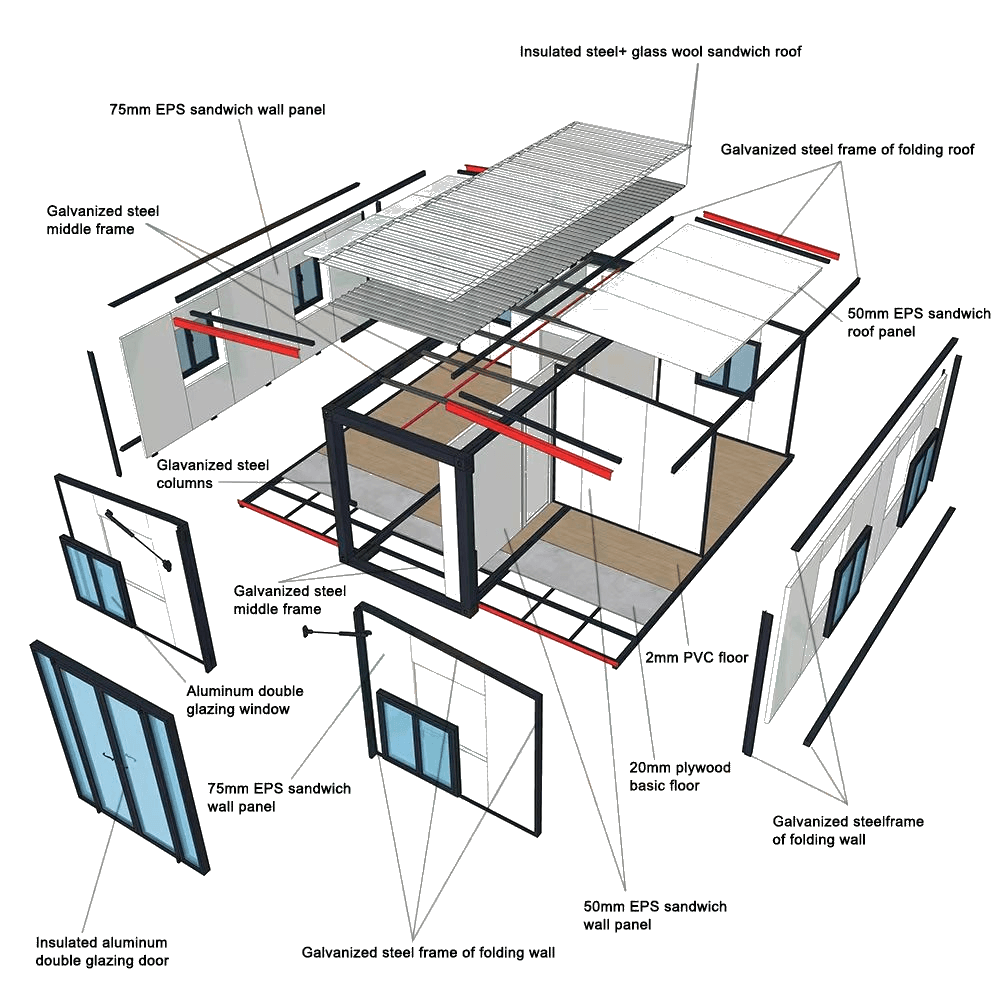
A factory-manufactured dwelling specifically designed for habitation, delivered as a complete or near-complete unit. This is what we offer at GFK Homes.
Key advantages
- Designed for living: Rooms, kitchen, bathroom, and laundry are designed in from the start — not retrofitted into a structure designed for something else.
- NCC compliant from factory: Built to National Construction Code standards including energy performance, fire safety, and structural requirements.
- Fast-track approval compatible: Designed to meet CDC requirements in NSW (≈20 days approval), accepted development in QLD, and equivalent pathways in other states.
- Factory quality control: Consistent build quality in a controlled environment, not exposed to weather during construction.
- Expandable designs: Our models unfold on-site, giving you more living space than the transport footprint suggests.
The real cost
- Base shell: From $22,900 AUD (landed)
- Premium turn-key (kitchen, bathroom, fixtures): From $32,900 AUD (landed)
- Site works, approvals, connections: Additional — varies by site
The total project cost is often equal to or lower than a proper shed or container conversion, while delivering a genuinely livable result.
Council approval
- Designed to work with fast-track pathways in most states.
- Comes with factory engineering and compliance documentation.
- Certifier-ready — reduces approval timeline and cost.
See our state approval guides for specific requirements in your state.
The hidden cost trap
Here's what most people miss when they think "a shed is cheaper":
| Cost element | Shed | Container | Prefab Kit |
|---|---|---|---|
| Base structure | $8K–$15K | $2K–$5K | Included in kit price |
| Insulation | $5K–$12K | $8K–$15K | Factory-included |
| Internal fit-out | $15K–$30K | $20K–$35K | Factory-included |
| Plumbing & electrical | $8K–$15K | $8K–$15K | Pre-wired/pre-plumbed |
| Engineering/certification | $3K–$8K | $5K–$10K | Included documentation |
| Council approval | $2K–$5K (if approved) | $2K–$5K (if approved) | $2K–$5K (fast-track) |
| Total estimate | $41K–$85K | $45K–$85K | $23K–$45K + site works |
The "cheap" options often end up costing more once you account for all the work needed to make them genuinely livable and compliant.
Decision framework
Choose a shed conversion if:
- You only need a non-habitable space (studio, workshop, storage)
- Your council specifically supports shed conversions
- You have trade skills and will do significant work yourself
Choose a container if:
- You need a temporary or relocatable structure
- You're in a rural area with minimal planning oversight
- The industrial aesthetic is a deliberate design choice
Choose a prefab granny flat kit if:
- You want a genuine dwelling for full-time living or rental
- Council compliance and fast-track approval matter
- You want factory quality control and a defined timeline
- Total project cost matters (not just the upfront unit price)
What to do next
- Check your state's approval rules — see our state-by-state approval guides
- Understand total project cost — use our cost calculator to budget properly
- Get a tailored quote — request a quote with your postcode, use case, and timeline
We'll help you understand what's feasible for your specific site and budget — no guesswork, no hidden costs.
Author

Categories
More Posts
Rental Yield Playbook for a 37m² Granny Flat
Granny flat rental yield playbook for a 37 m² prefab granny flat — how to estimate rent potential, vacancy risk, and payback period before committing. A practical investing model for granny flat investment in Australia.
Flat-Pack vs. Expandable Granny Flat Kits: 2026 Procurement & Shipping Yield Comparison
Compare flat-pack vs expandable granny flat kits for 2026 procurement: 40HC yield, site labor, crane access, sealing risk, and RFQ next steps.
B2B Importer's Guide to Prefab Granny Flat Compliance: AS/NZS, CE, and ICC-ES
2026 prefab granny flat compliance guide for B2B importers: AS/NZS, CE, ICC-ES, WaterMark, SAA, supplier checks, RFQs, and approval limits before deposit.